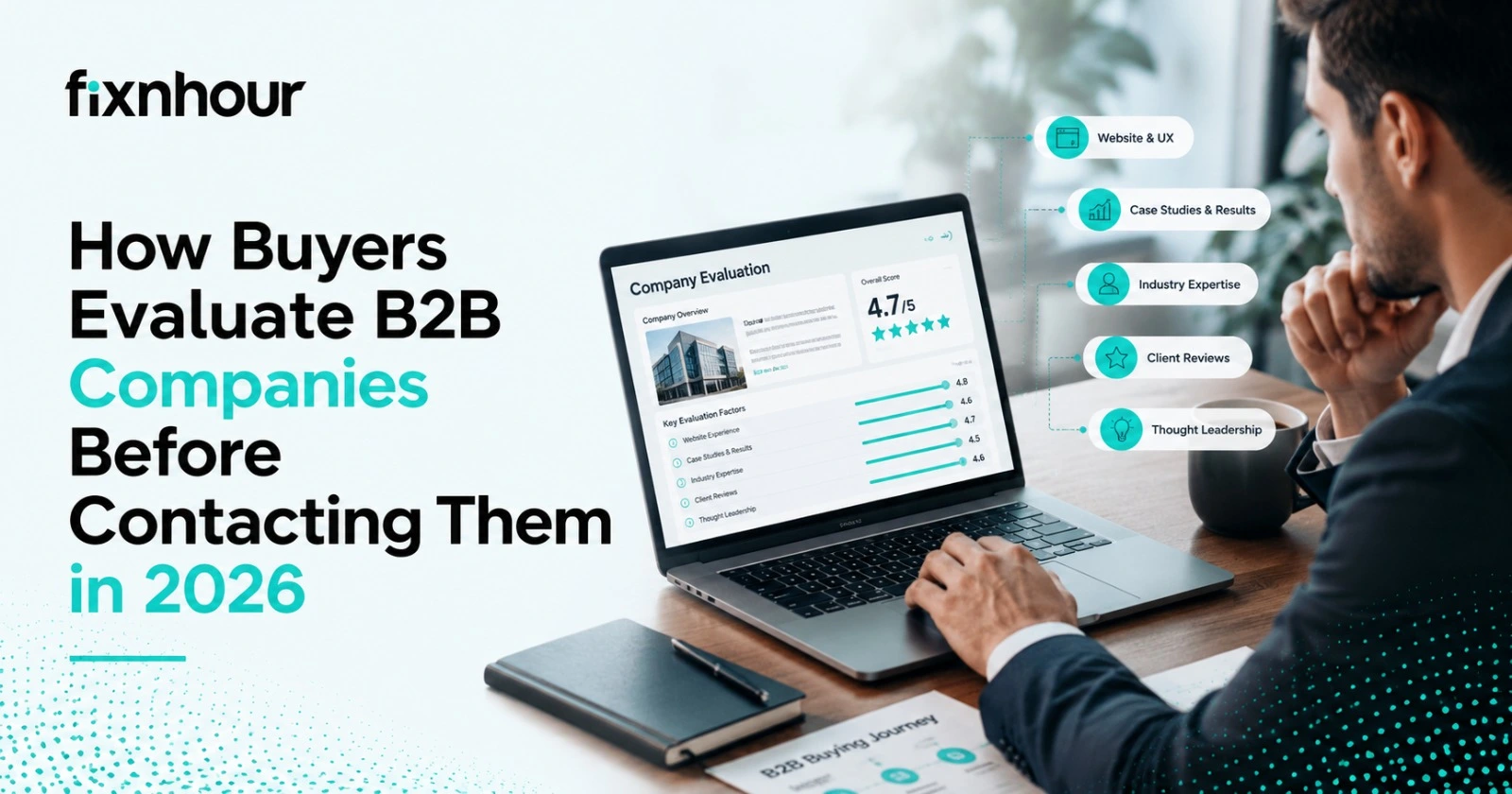
The B2B buying process has changed dramatically over the past few years. Today's buyers rarely contact a company immediately after discovering it. Instead, they spend significant time researching, comparing, and evaluating multiple providers before making the first inquiry. Modern decision-makers have access to countless resources, including business directories, review platforms, company websites, social media profiles, AI-powered search tools, and industry marketplaces. This wealth of information allows buyers to assess credibility, expertise, pricing, and trustworthiness without speaking to a sales representative. In 2026, businesses that understand how buyers evaluate B2B companies gain a significant competitive advantage. By optimizing their online presence and showcasing trust signals, companies can attract more qualified leads and improve conversion rates.
Key Takeaways
- Most B2B buyers complete extensive research before contacting vendors.
- Company websites are often the first evaluation point.
- Reviews, testimonials, and ratings strongly influence trust.
- Case studies provide proof of expertise and results.
- Buyers compare multiple providers before creating a shortlist.
- Verified business listings increase credibility and visibility.
- AI-powered search platforms are influencing vendor selection.
- Transparency and a strong online reputation improve conversions.
Quick Answer
B2B buyers evaluate companies by reviewing their websites, online reputation, customer reviews, case studies, pricing transparency, certifications, industry expertise, and business listings. They compare multiple vendors across various platforms before contacting the companies that demonstrate the highest levels of trust, credibility, and proven success.
Understanding the Modern B2B Buyer Journey
Today's B2B buyer journey is more complex and research-driven than ever. Buyers explore multiple channels, compare vendors, read reviews, and seek peer recommendations before making decisions. Understanding each stage of this journey helps businesses create targeted marketing strategies, build trust, improve engagement, and increase conversions in a competitive marketplace.
Several factors have contributed to this shift:
- Easy access to information online
- Growth of review and comparison platforms
- Increased competition among service providers
- AI-powered search and recommendation systems
- Demand for transparency and accountability
Also Read: How to Identify Fake Reviews in B2B Platforms (2026 Guide)
The Top Factors Buyers Evaluate Before Reaching Out
Before contacting a vendor, B2B buyers carefully assess several key factors, including company reputation, industry expertise, customer reviews, pricing transparency, service quality, and proven results. Understanding what influences buyer decisions helps businesses strengthen their credibility, address concerns proactively, and position themselves as the preferred choice in competitive markets.
Company Reputation and Brand Authority
Trust remains one of the most important factors in B2B purchasing decisions. Buyers want confidence that a provider can deliver promised results.
They often evaluate:
- Online reviews
- Industry reputation
- Business longevity
- Awards and certifications
- Media mentions
- Thought leadership content
Industry Experience and Expertise
Buyers prefer working with providers who understand their industry and business challenges.
They typically look for:
- Years of experience
- Industry-specific projects
- Specialized services
- Technical expertise
- Client success stories
How Buyers Analyze a Company's Website
A company's website is often the first impression for potential buyers. They evaluate factors such as professionalism, service offerings, case studies, customer testimonials, pricing information, and ease of navigation. A well-optimized website builds trust, showcases expertise, and helps buyers confidently determine whether a company can meet their business needs.
Website Design and User Experience
Professional design creates credibility. A poorly designed website can reduce trust and increase bounce rates.
Important factors include:
- Clean layout
- Mobile responsiveness
- Easy navigation
- Fast loading speed
- Professional branding
Service Pages and Content Quality
Buyers want clear explanations of services and capabilities.
They expect:
- Detailed service descriptions
- Industry-specific solutions
- Transparent processes
- Frequently asked questions
- Helpful educational content
Contact Information and Accessibility
Trust increases when buyers can easily find:
- Phone numbers
- Email addresses
- Physical office locations
- Contact forms
- Social media profiles
Why Reviews, Ratings, and Testimonials Matter
Reviews, ratings, and testimonials play a crucial role in building trust and influencing buyer decisions. B2B buyers rely on real customer experiences to evaluate credibility, service quality, and reliability. Positive feedback reduces perceived risk, strengthens brand reputation, and increases the likelihood of prospects choosing a company over its competitors.
Before contacting a company, buyers often search for:
- Customer reviews
- Testimonials
- Third-party ratings
- Success stories
- Industry feedback
Where Buyers Look for Reviews
Common review sources include:
- Google Business Profiles
- Business directories
- Industry marketplaces
- Social media platforms
- B2B comparison websites
The Role of Case Studies, Portfolios, and Success Stories
Case studies, portfolios, and success stories provide tangible proof of a company's expertise and results. They help buyers understand real-world applications, evaluate past performance, and assess problem-solving capabilities. By showcasing measurable outcomes and client achievements, these assets build credibility, demonstrate value, and support confident purchasing decisions.
Case studies help demonstrate:
- Problem-solving capabilities
- Industry expertise
- Technical skills
- Business impact
- Return on investment
A strong case study typically includes:
- Client challenges
- Solution implemented
- Project process
- Results achieved
- Key metrics and outcomes
How Buyers Compare Multiple B2B Companies
B2B buyers rarely choose the first company they find. Instead, they compare multiple providers based on expertise, pricing, service quality, customer reviews, industry experience, and proven results. By evaluating strengths, weaknesses, and value propositions, buyers identify the partner that best aligns with their goals, budget, and long-term business needs.
Expertise Comparison
Buyers compare:
- Industry knowledge
- Technical capabilities
- Service offerings
- Certifications
Portfolio Comparison
They analyze:
- Previous projects
- Design quality
- Project complexity
- Client outcomes
Pricing Comparison
Although price matters, buyers often focus on overall value rather than selecting the cheapest provider.
Support and Communication
Buyers also evaluate:
- Response speed
- Availability
- Transparency
- Ongoing support
Statistics & Market Insights on B2B Buyer Research in 2026
B2B buyer behavior in 2026 is increasingly digital, with decision-makers conducting extensive online research before contacting vendors. Market insights reveal that buyers rely on websites, reviews, case studies, comparison platforms, and peer recommendations to evaluate options. Understanding these trends helps businesses optimize their online presence, build trust, and attract qualified leads.
Several trends are shaping vendor evaluation:
- Buyers increasingly prefer self-service research.
- AI-powered search tools are influencing purchasing decisions.
- Trust signals have become more important than ever.
- Business directories continue to play a major role in vendor discovery.
- Companies with strong online reputations receive more qualified leads.
Step-by-Step Process Buyers Use to Evaluate B2B Companies
B2B buyers follow a structured evaluation process that begins with identifying business needs, researching potential vendors, comparing services, reviewing testimonials, analyzing case studies, and assessing pricing. They then shortlist providers, schedule consultations, and evaluate overall value before making a final decision, ensuring the best fit for their objectives.
| Step | Buyer Evaluation Process | Key Actions |
|---|---|---|
| 1 | Define Business Requirements | Identify project goals, budget, timeline, scope, technical requirements, and required expertise before starting the vendor search. |
| 2 | Search for Potential Vendors | Research providers through search engines, B2B marketplaces, business directories, referrals, industry networks, and professional platforms. |
| 3 | Review Company Websites | Evaluate company credibility, service offerings, industry experience, certifications, team expertise, and overall brand professionalism. |
| 4 | Analyze Reviews & Testimonials | Check client reviews, ratings, testimonials, and third-party feedback to verify trustworthiness and customer satisfaction. |
| 5 | Evaluate Portfolios & Case Studies | Review previous projects, success stories, measurable results, industry experience, and problem-solving capabilities. |
| 6 | Compare Pricing & Deliverables | Compare pricing models, project scope, deliverables, timelines, support services, and overall return on investment (ROI). |
| 7 | Create a Vendor Shortlist | Narrow down options based on expertise, reputation, budget fit, communication quality, and proven track record. |
| 8 | Contact Preferred Vendors | Reach out to shortlisted providers, discuss project details, request proposals, conduct meetings, and finalize the best partner. |
Step 1: Define Business Requirements
Buyers identify:
- Project goals
- Budget
- Timeline
- Required expertise
Step 2: Search for Potential Vendors
They use:
- Search engines
- Business directories
- Referrals
- Industry platforms
Step 3: Review Company Websites
Buyers assess credibility and service quality.
Step 4: Analyze Reviews and Testimonials
Trust signals are verified through customer feedback.
Step 5: Evaluate Portfolios and Case Studies
Evidence of success becomes a major decision factor.
Step 6: Compare Pricing and Deliverables
Buyers compare overall value and expected outcomes.
Step 7: Create a Shortlist
The most qualified providers are selected.
Step 8: Contact Preferred Vendors
Only after thorough research do buyers initiate conversations.
Benefits of Understanding Buyer Evaluation Behavior
Understanding buyer evaluation behavior helps businesses align their marketing, sales, and customer experience strategies with real buyer expectations. It enables companies to build trust, address concerns proactively, improve lead quality, increase conversion rates, and create a stronger competitive advantage by delivering the information buyers need at every stage.
- Generate more qualified leads
- Improve website conversions
- Build stronger credibility
- Reduce customer acquisition costs
- Increase sales opportunities
- Strengthen brand authority
Why Choose Fixnhour
Fixnhour simplifies the process of finding trusted B2B service providers by connecting businesses with verified companies across various industries. With detailed company profiles, authentic reviews, portfolios, and transparent information, Fixnhour helps buyers make informed decisions faster, saving time while increasing confidence in choosing the right business partner.
- Verified business profiles improve credibility.
- Businesses gain exposure to targeted buyers.
- Easy company comparison helps buyers make informed decisions.
- Industry-focused listings improve lead quality.
- Enhanced visibility supports SEO and digital marketing efforts.
- Trusted profiles help generate more inquiries and conversions.
Common Mistakes Companies Make That Drive Buyers Away
Many companies lose potential buyers due to outdated websites, unclear service information, lack of customer reviews, weak communication, hidden pricing, and insufficient proof of results. These mistakes create uncertainty and reduce trust. By addressing these issues, businesses can improve credibility, enhance buyer confidence, and increase conversion opportunities.
Common mistakes include:
- Outdated websites
- Poor user experience
- Missing reviews
- Lack of case studies
- Slow response times
- Inconsistent branding
- Unclear service information
- Weak online visibility
Conclusion
Today's B2B buyers conduct extensive research before contacting service providers. They evaluate websites, reviews, case studies, pricing transparency, expertise, and online reputation to identify the most trustworthy partners. Businesses that invest in credibility, visibility, and customer trust are more likely to attract qualified leads and convert prospects into long-term clients. By understanding how buyers evaluate companies in 2026, organizations can position themselves as the preferred choice in increasingly competitive markets. If your business wants to improve online visibility, build trust, and connect with qualified buyers, platforms like Fixnhour can help strengthen your digital presence and generate valuable business opportunities. Get Started Today.
Frequently Asked Questions
Q1. How do buyers evaluate B2B companies before contacting them?
Ans. Buyers evaluate B2B companies by researching their websites, online reviews, case studies, service offerings, certifications, industry experience, and client testimonials. They compare multiple vendors to assess credibility, expertise, pricing transparency, and customer satisfaction. A strong online presence and proven track record help businesses build trust and increase the likelihood of receiving inquiries from potential clients.
Q2. What information do B2B buyers look for on a company website?
Ans. B2B buyers typically look for detailed service information, company background, industry expertise, case studies, client testimonials, certifications, contact details, and pricing information. They also evaluate website design, user experience, loading speed, and mobile responsiveness. A professional and informative website helps buyers understand a company's capabilities and determine whether it can meet their business requirements.
Q3. Why are online reviews important when choosing a B2B service provider?
Ans. Online reviews provide valuable insights into a company's reliability, communication, service quality, and customer satisfaction. Buyers often use reviews to verify claims made by vendors and reduce the risk of selecting an unsuitable provider. Positive and verified reviews build credibility, while a strong reputation can significantly influence purchasing decisions and improve lead generation opportunities.
Q4. How do case studies influence B2B buying decisions?
Ans. Case studies demonstrate a company's ability to solve real business challenges and deliver measurable results. Buyers review case studies to understand how a provider approaches projects, overcomes obstacles, and achieves success for clients. Detailed case studies featuring objectives, solutions, and outcomes help businesses establish authority and increase buyer confidence before initial contact.
Q5. What are the biggest trust signals B2B buyers consider?
Ans. The most important trust signals include verified reviews, client testimonials, industry certifications, awards, case studies, business longevity, professional websites, and active online profiles. Buyers also value transparent communication, clear service descriptions, and evidence of successful projects. These trust indicators help businesses differentiate themselves from competitors and encourage prospects to reach out.
Q6. How can businesses improve their chances of being selected by B2B buyers?
Ans. Businesses can improve their chances by maintaining a professional website, collecting verified customer reviews, publishing case studies, optimizing their online presence for search engines, and listing their company on trusted business directories such as Fixnhour. Consistently showcasing expertise, transparency, and successful client outcomes helps attract qualified buyers and increases conversion opportunities.